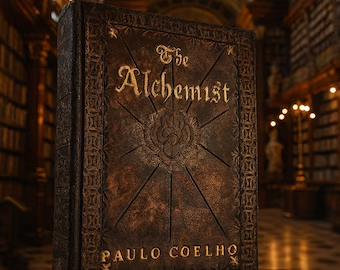


There is a quiet moment that happens every time you open a book.
You might not notice it at first. It slips in quietly, somewhere between the first page and the second. But once you become aware of it, the experience of reading begins to feel indulgently different. More like you are entering another mind.
It is an unusual arrangement when you pause to think about it. A person you will never meet has spent months, sometimes years, arranging thoughts carefully into sentences. They struggled with ideas, revised them, doubted them, reshaped them again. Eventually those thoughts settled into ink on paper.
Then one evening you sit down under a lamp and open the book.
And suddenly those thoughts begin unfolding inside your own mind.
No introduction or explanation of who you both are, whatsoever. The conversation simply begins, quietly.
Reading creates a strange form of intimacy.
Not the one we often associate with the word or with dramatic confessions. Instead, there is a quiet sharing of perception.
The writer shows you how they see the world.
Sometimes it feels like being guided gently through another person’s inner landscape. You notice what they notice. You follow the path their thinking takes through difficult questions, small observations or, unexpected moments of clarity.
For a while your mind moves alongside theirs.
It is a curious kind of companionship.
Think about the books that stayed with you longest. Often it is not the plot that remains but the presence of the writer’s voice. You remember the tone of their thinking, the way they looked at human behaviour, the patience with which they unfolded an idea.
The relationship becomes familiar in a way that is difficult to explain.
You begin recognising the rhythm of their sentences. Certain observations feel almost predictable because you understand how their mind tends to approach the world.
It is a little like spending time with someone who speaks slowly and thoughtfully. After a while you begin anticipating the direction their thoughts might take.
And yet this companionship can cross centuries.
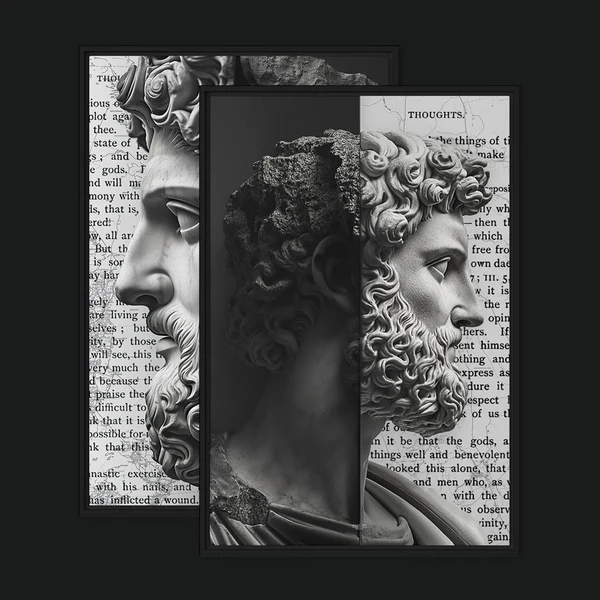
You might read Marcus Aurelius while sitting in a quiet room two thousand years after he wrote those notes to himself. His reflections on patience, anger, and mortality reach across time with surprising clarity.
The Roman Empire disappears into history, yet the voice remains recognisable.
Or consider Dostoevsky.
Opening one of his novels feels less like reading and more like entering a room where intense moral conversations are already taking place. His characters wrestle with guilt, faith, despair, freedom. They speak with a raw honesty that feels strangely alive even now.
You may close the book hours later and still feel as though you have spent time in the company of difficult, fascinating minds.
The intimacy of reading comes partly from silence.
Unlike most conversations, reading does not require immediate responses. The writer speaks patiently through the page while you listen at your own pace. If a sentence deserves more attention, you simply pause. If a paragraph unsettles you, you sit with it for a moment.
No one is waiting for your reply. The space between thoughts remains open.
This is one reason reading often deepens at night.
The world grows quieter and the house settles into stillness. Outside the window the city continues at a distance, but inside the room the book becomes the centre of attention.
A lamp casts a small circle of light across the page.
Within that circle the voice of another mind continues speaking.
It is difficult to think of another human activity quite like this. Films move too quickly. Conversations demand responses. Online writing often rushes from point to point without allowing ideas to breathe.
Books allow a conversation to unfold slowly enough that the mind can actually inhabit it.
And perhaps this is why certain books remain with us for years.
Instead of just informing us, they introduce us to a way of thinking that quietly reshapes our own.
Long after the book is closed, fragments of the conversation continue in the background of the mind. A line returns during an ordinary afternoon. A question appears in an unexpected moment. A perspective learned from another mind becomes part of the way we now see the world.
The writer may be long gone.
The conversation continues.
And somewhere in the quiet space between pages and thought, two minds meet without ever having been introduced.
— Nicky
Founder, clasNic Pages