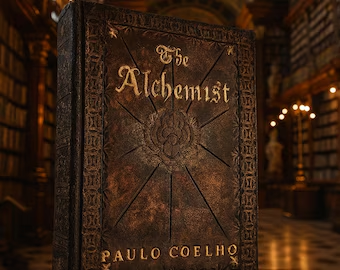



Reading once carried an atmosphere of ceremony. Today reading is treated as a sophisticated hobby.
In medieval monasteries reading happened inside scriptoria, rooms dedicated entirely to the copying and study of texts. Monks worked beside wooden desks, reproducing manuscripts by hand. The process required months and years of patience. A single book could represent an enormous investment of labour.
Those manuscripts and books were treated as vessels of knowledge capable of shaping the soul. Reading therefore demanded attention, discipline, and reverence. Silence played an important part of the intellectual ritual.
Even earlier traditions approached reading with similar seriousness. In many ancient cultures sacred writings were recited aloud rather than scanned silently. The reader was the voice through which the text entered the world again. Words carried weight because they were believed to participate in deeper realities.
This connection between reading and transformation did not disappear with the medieval period. It continued inside traditions that explored the symbolic dimensions of knowledge.
Consider the history of esoteric texts. Alchemy, for example, produced manuscripts that described strange chemical processes involving metals and mysterious substances. Yet many scholars now believe those writings also functioned as psychological maps.
The language of transmutation described inner change. Readers were expected to interpret symbols rather than extract literal instructions. Engaging with such texts required a good deal of contemplation.
The reader studied images, metaphors, and allegories while attempting to uncover the underlying pattern of meaning. I’m not exaggerating when I say this was an advanced form of meditation.
We might notice something similar in mystical traditions. Kabbalists treated scripture as a landscape filled with hidden correspondences. Islamic philosophers examined sacred language for layers of symbolic insight. Christian mystics wrote treatises describing the transformation of consciousness through prayer and reflection.
Books were not treated and used as containers of information.
The modern reader often encounters these traditions with curiosity but also with distance. The world today feels less enchanted than the one inhabited by medieval scribes or mystical philosophers.
Yet traces of that older attitude toward reading remain surprisingly accessible. You might feel it when opening a difficult philosophical work that demands slow attention. The experience differs sharply from scrolling through an article online. Each paragraph asks for reflection rather than immediate reaction.
The book resists speed and in that resistance something ancient wakes up. Philosophy reading still carries a faint echo of its earlier role as a transformative practice. The mind enters the text gradually, adjusting to its rhythm, allowing ideas to settle before moving forward.
It’s like a conversation with the past. A writer from another century presents a set of insights shaped by their historical context. And then the reader engages those insights within the conditions of the present moment.
This interaction explains why intellectual history often advances through acts of interpretation rather than invention. Philosophers read earlier philosophers. Scientists examine the work of their predecessors. Religious thinkers reinterpret ancient scriptures. The act of reading becomes part of the evolution of thought itself.
Each generation encounters the same texts under new circumstances and discovers fresh significance within them. From this perspective, reading is far more active than it first appears. The reader participates in the continuation of a conversation that may have begun centuries earlier.
The medieval monk copying a manuscript could not have imagined that his work might one day appear on the desk of a modern reader surrounded by electric light and digital devices. Yet across time the same words continue influencing new minds.
The ritual atmosphere of the scriptorium has mostly disappeared, replaced by libraries, bookstores, and personal shelves. But the deeper significance of reading has not vanished entirely.
As the book displays its ideas in letters, the mind enters the conversation in thoughts.
And somewhere between page and thought, the long history of reading continues.
— Nicky
Founder, clasNic Pages