

Modern culture celebrates discovering new things.
New articles, books, ideas, point of views… And when information bursts in huge waves, we get pushed to move forward before we grasped the previous thought.
In this environment rereading feels unnecessary and ironically “a waste of time”. Why revisit a book when thousands of others remain waiting?
And let me tell you that there are tons of reasons to do so. Take a novel you read ten years ago and open it again today. Yes, the letters and sentences are right where they used to be, however, the essence of it might feel different. Or you might notice a new “aha” moment in a sentence that back then felt random.
Characters that once seemed admirable may now appear naive. Scenes that used to feel unremarkable suddenly enlighten insights that escaped your attention earlier.
This shift didn’t happen inside the text of course.
Rereading exposes the fact that reading is never a static interaction. Each encounter takes place within a different version of the reader’s mind.
The person who first opened the book years ago possessed different experiences, assumptions, questions and attitude. The person reading today carries a larger archive of life events through which the text is interpreted. It’s like the book is read by two different people, in different ages and worlds they come from.
Jorge Luis Borges once remarked that a book changes whenever it is read again. And this is easily backed up by psychology too.
Reading is an act of interpretation. Every reader construct meaning by connecting the text with their own memories, expectations, and intellectual habits. When those elements evolve, the meaning constructed from the same words evolves as well. This explains why certain books reward repeated encounters.
Writers like Virginia Woolf or Italo Calvino often reveal layers of thought that remain invisible during the first reading. The narrative unfolds on the surface, yet beneath it exist patterns of observation that require familiarity to recognise.
The reader gradually becomes sensitive to those patterns. Rereading also challenges the assumption that a book has been fully experienced once the final page has been turned. While quite frankly the first reading often functions as an introduction.
You familiarise with the author’s voice, understand the structure of the argument or story, and gain a basic sense of the intellectual territory the book occupies.
Later readings allow deeper exploration. Ideas that once seemed irrelevant or shallow, begin revealing their significance. The reader notices questions that remained unasked during the first encounter. The book “becomes” richer because the reader has learned how to listen more carefully.
And so rereading transforms reading from consumption into dialogue. Instead of moving rapidly from one text to the next, the reader develops an ongoing relationship with particular works.
The conversation deepens over time.
And somewhere inside that slow return to familiar pages, the mind begins recognising that some ideas deserve more than a single encounter.
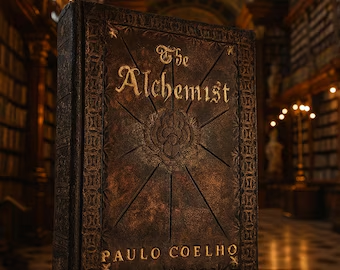
(Ps. A personal rereading experience that described pretty much everything I wrote above, is reading “The Alchemist” from Paulo Coelho. Reading it five years ago, and now again, felt like reading two different books. And yes, me now and then are also two different identities).
— Nicky
Founder, clasNic Pages