


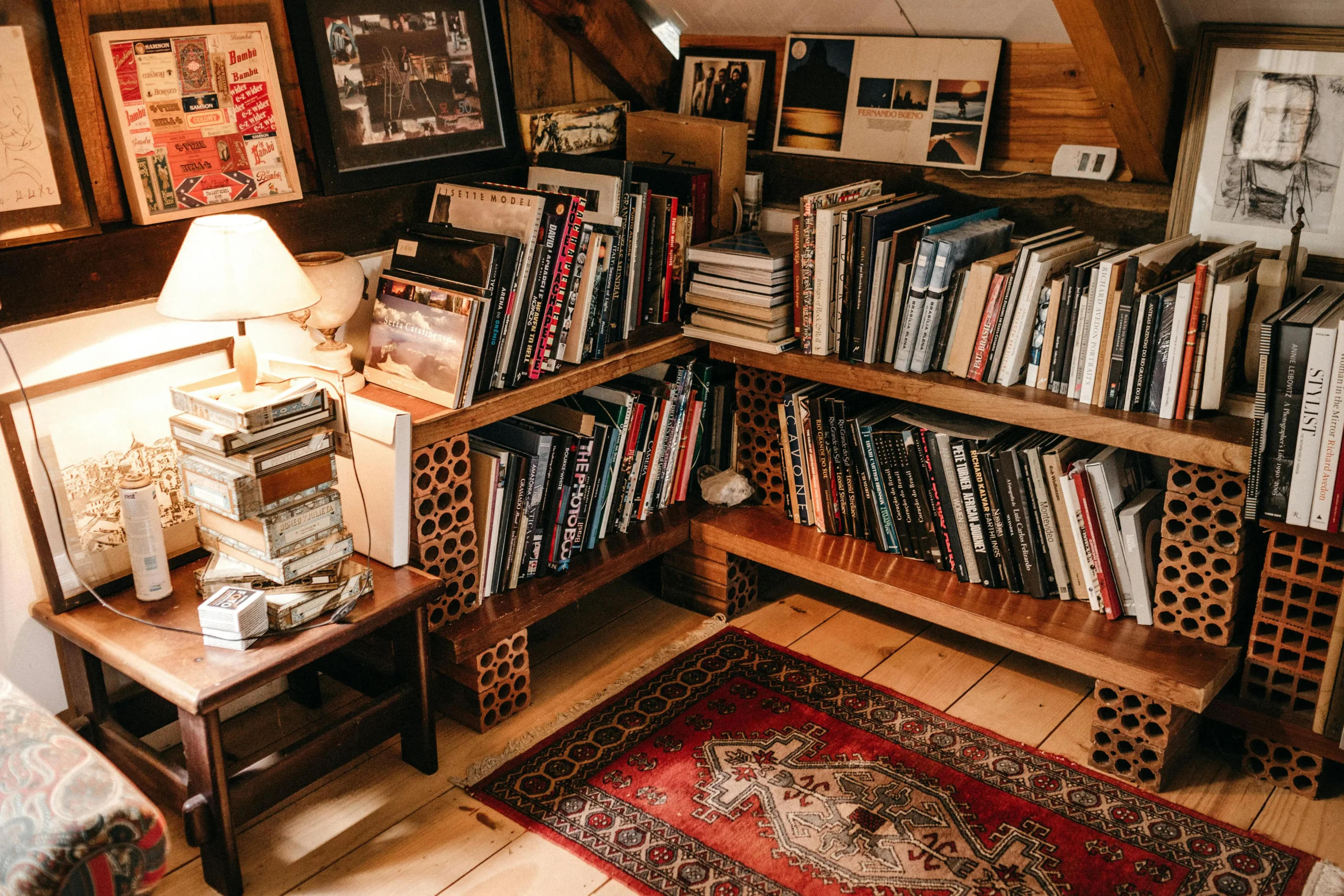
Walk into certain rooms and watch the mind change its behaviour, like a bratty little kid with their maths teacher.
Your attention steadies and your thoughts stop jumping quickly. Even the pace at which you read slows down effortlessly.
Libraries have this effect on people. So do quiet studies. Old reading rooms. A desk placed carefully beside a window. Spaces that appear ordinary until you sit down and realise that the mind has entered a different rhythm.
Most people assume thinking is purely internal. Something that happens independently of the physical world around us.
However, the environment plays a pivotal role in every act of thought.
Throughout history people who cared seriously about thinking have acknowledged this as a fact. Monasteries built entire architectural traditions around silence and reflection. Scholars arranged private studies with shelves that surrounded the desk like walls of patient conversation.
Thinking requires space.
Not only mental space but physical space. A place where the mind does not feel constantly interrupted by the demands of other voices.
The tragedy of many modern environments is that they are mentally exhausting. Attention is pulled in too many directions at once. Screens compete for visual dominance. Conversations overlap with background music. The mind adapts by becoming defensive and restless. In such places thinking remains shallow because depth requires calm.
There’s a terrible disappearance of environments where sustained thinking can occur.
You feel the contrast the moment you enter a reading room. A form of collective courtesy. No one announces that thinking is happening here, but the room simply encourages it. The atmosphere becomes part of the process.
This is why reading late at night often feels different from reading during the day. An idea that would have vanished during the afternoon now finds enough silence to take shape.
Rooms shape the behaviour of thought the way soil shapes the growth of a plant. A fertile environment does not create the idea itself, but it allows the idea to develop without being constantly disturbed.
High ceilings create quiet echoes. Shelves form protective walls of books. Light enters carefully rather than aggressively. The room seems to whisper that ideas deserve patience.
But don’t get me wrong, you do not need a cathedral to recreate this atmosphere.
A desk near a window will do. A shelf where books wait or a lamp that draws the eye toward the page rather than toward a glowing screen.
Gradually the room begins influencing the mind.
Thought slows down.
Reading deepens.
And somewhere within that quiet arrangement of furniture and light, the conditions for real thinking return.
— Nicky
Founder, clasNic Pages